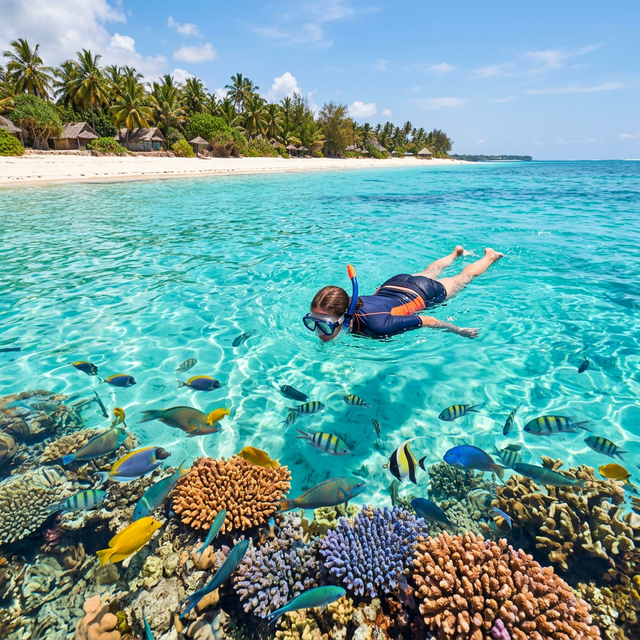
Snorkeling & Diving in Watamu: Kenya's Best Underwater Paradise
Explore pristine coral gardens, swim with sea turtles, and discover why Watamu Marine Park is East Africa's snorkeling crown jewel.
Watamu Marine National Park, established in 1968, is Kenya's oldest marine protected area and one of the most spectacular snorkeling destinations in the Indian Ocean. Here's everything you need to plan your underwater adventure.
Why Watamu?
Watamu's reefs are among the healthiest coral systems in Kenya, with over 600 species of fish, 110 types of coral, sea turtles, manta rays, and whale sharks (seasonal). The warm, crystal-clear waters offer visibility up to 30 meters.
Best Snorkeling Sites
Coral Garden The most popular snorkeling spot, accessible by glass-bottom boat. Shallow waters (2-5m) teeming with parrotfish, angelfish, and moray eels.
Turtle Bay Named for the resident green and hawksbill turtles. Good chance of swimming alongside these gentle giants.
The Blue Lagoon A stunning natural pool surrounded by reef. Perfect for beginners with calm, shallow water.
Diving Sites
For certified divers, Watamu offers deeper exploration:
- The Canyon — A dramatic underwater cliff dropping to 25m, frequented by eagle rays and reef sharks
- Moray Reef — Named for the giant moray eels hiding in crevices
- Brain Coral Garden — Massive brain coral formations over 200 years old
Best Time for Water Activities
October to March offers the best visibility and calmest seas. During the southeast monsoon (June–August), visibility decreases but whale shark sightings increase.
Operators & Prices
| Activity | Price Range | Duration |
|---|---|---|
| Snorkeling trip | KES 2,000–4,000 | 3-4 hours |
| Single dive | KES 5,000–8,000 | 2 hours |
| PADI certification | KES 35,000–50,000 | 3-4 days |
| Glass-bottom boat | KES 1,500–2,500 | 2 hours |
Conservation
The park fee is KES 1,725 for international adults and KES 300 for residents. These fees directly fund reef conservation and anti-poaching patrols. Please practice reef-safe snorkeling: don't touch coral, use reef-safe sunscreen, and take all trash with you.